
Succulent Shelf · November 2026

A gritty mix, by the numbers

Pumice, orchid bark, coir and sand in honest proportions for your pot and room. No secret recipe — just what drains, what holds water, and how much of each your plant can actually survive.

Keep bagged substrate & finished mix away from pets

  • Mixed by hand in Çankaya
  • A reading journal — no shop
  • Published monthly since 2016
  • Figures in % and g/L
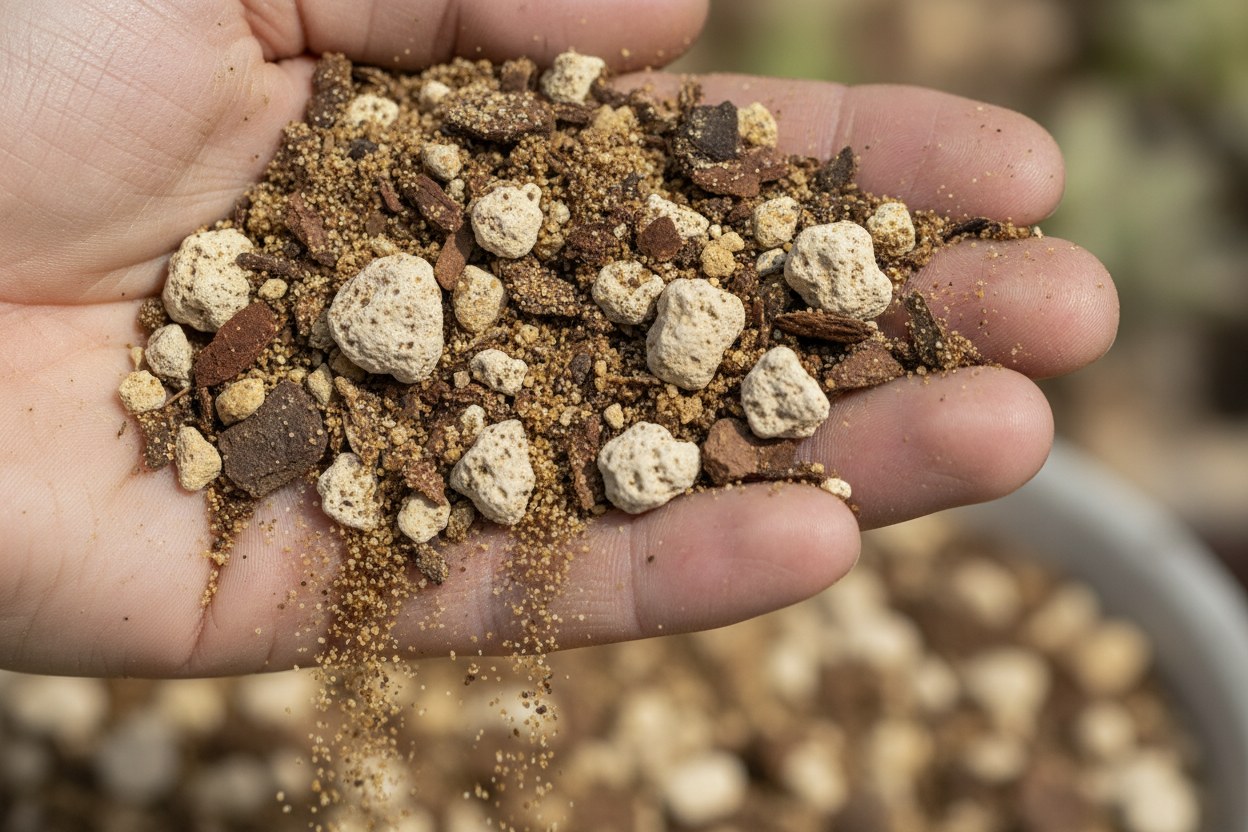
A cupped hand holding a free-draining gritty succulent mix of pale pumice, brown orchid bark and coarse sand

Reference mix · No. 00

The shelf default

Pumice45%
Orchid bark15%
Coir25%
Coarse sand15%

A good starting point for most rosette succulents in a terracotta pot. The builder below tunes it to your plant.

The masthead

Issue No. 119 — measured twice, watered once

A monthly journal for people who grow succulents, cacti and arid plants on a windowsill or a cold balcony in Ankara. We print proportions, not promises, and we would rather admit a plant is resting than tell you it is thriving.

Editor & substrate notesDeniz Arslan
Climate & dormancySelin Köksal
Figures & measurementEmre Taşçı
CadenceMonthly · since 2016

The journal in numbers · Plate 119

119Issues printed
1,247Plant records held
342Reader letters
46Contributors

Substrate · the four parts

What each part is actually for

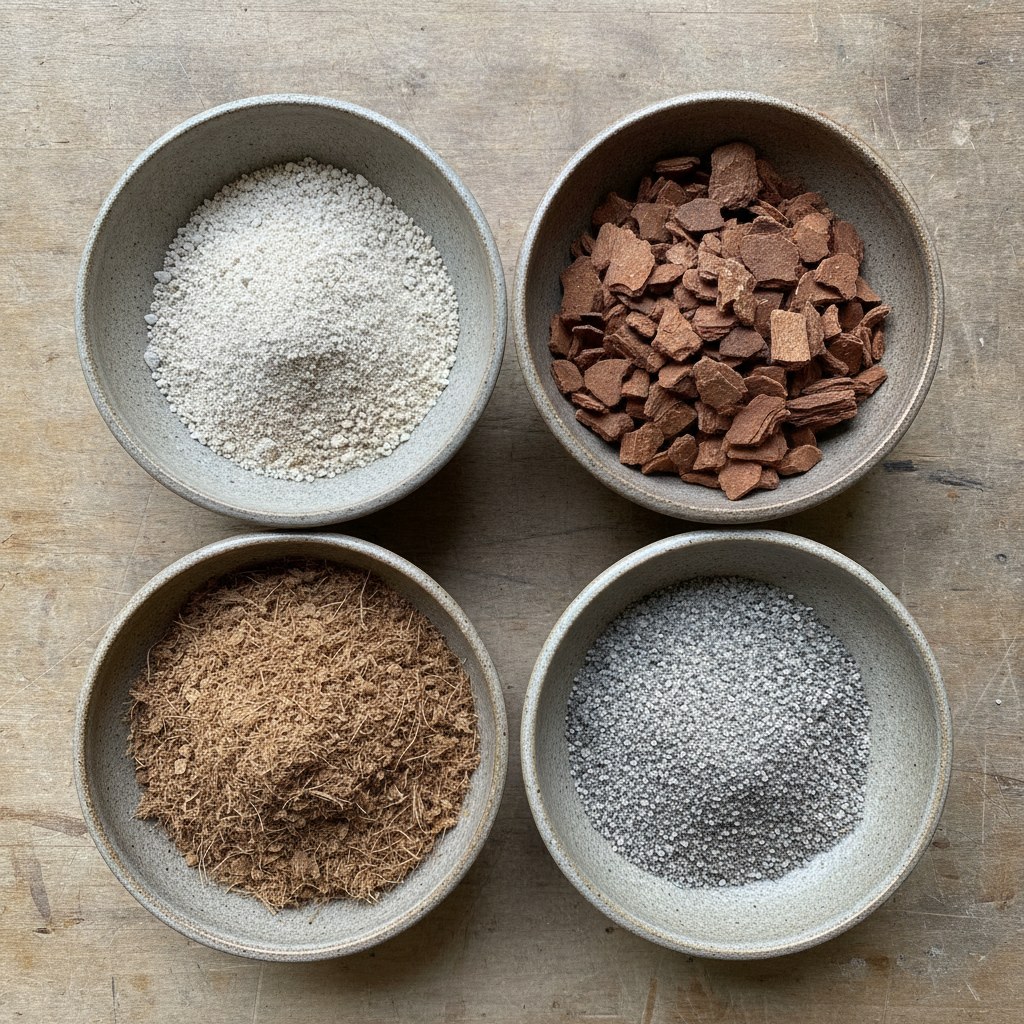
A succulent mix is a balance between air and water. Three of these four ingredients are there to keep the mix open and draining; only one is there to hold moisture. Read the share column as a range — the builder picks a point inside it.

Plate 01 · the four parts

Reference ranges · a free-draining shelf mix · bulk density dry
Component Role Particle Water held Share g/L
Pumice Air and free drainage — the skeleton 4–8 mm Low (surface film only) 40–55% 480
Orchid bark Structure and slow moisture 5–10 mm Medium 5–20% 260
Coir The moisture store — the only one fine–med High 10–35% 110
Coarse sand Weight and sharp drainage 1–3 mm Very low 10–30% 1,550
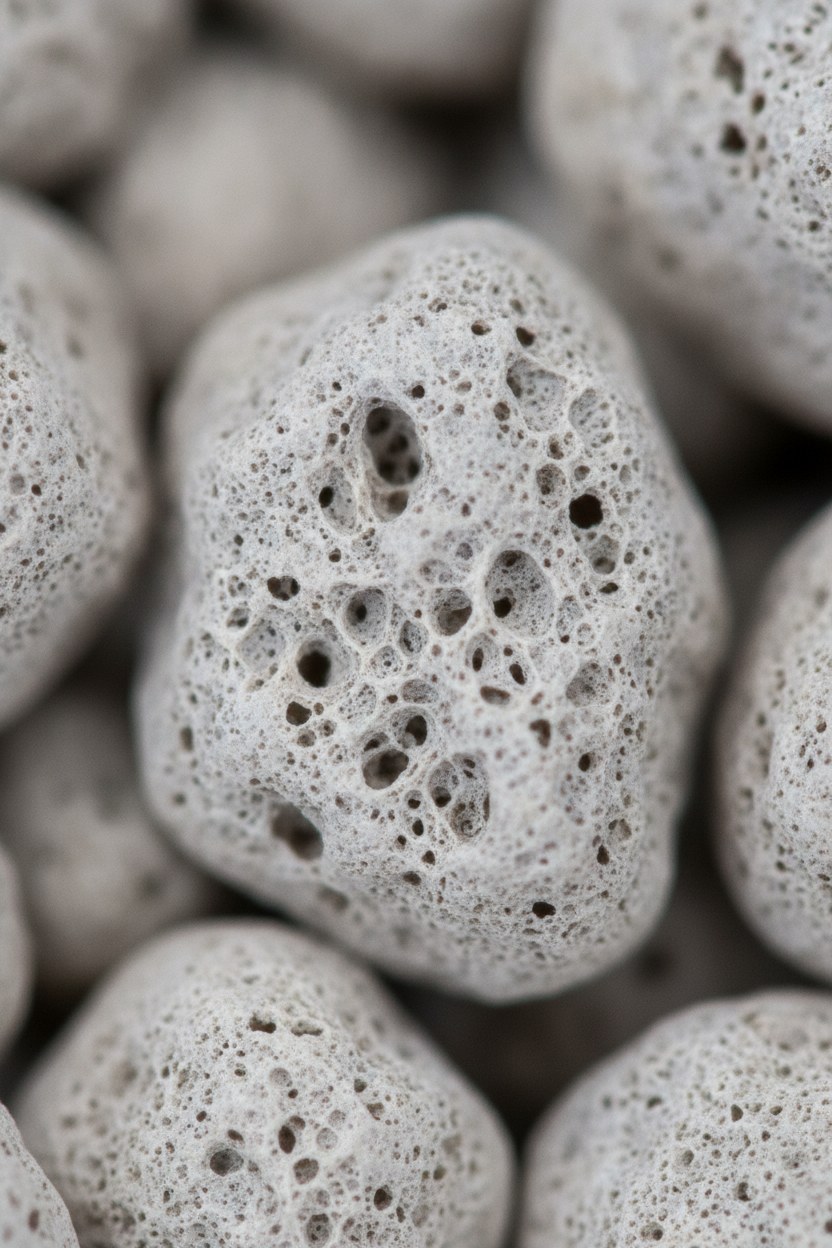
Macro photograph of pale grey porous pumice grains, four to eight millimetres across
Pumice, 4–8 mm. The pores hold air, not water — this is the part that stops rot.
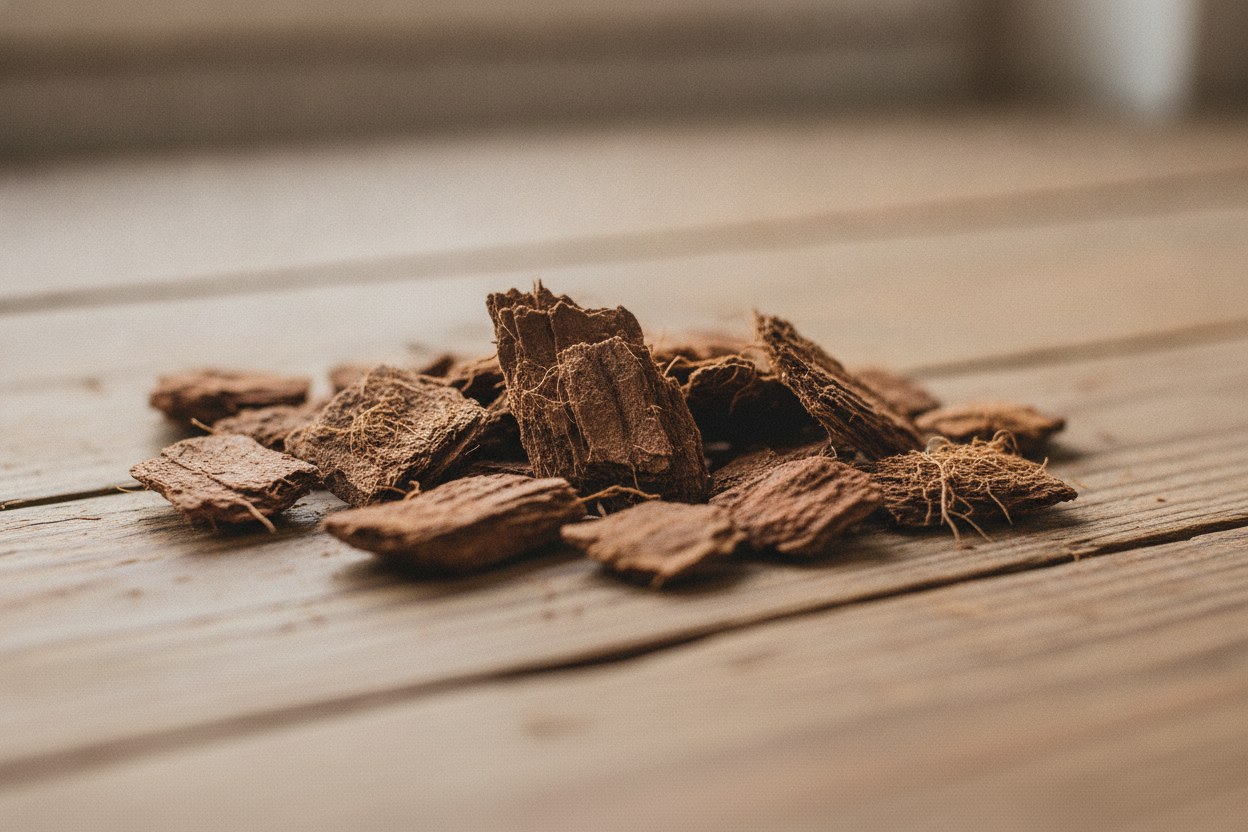
Chunks of brown orchid bark, five to ten millimetres, on a workbench
Orchid bark keeps structure as it ages.
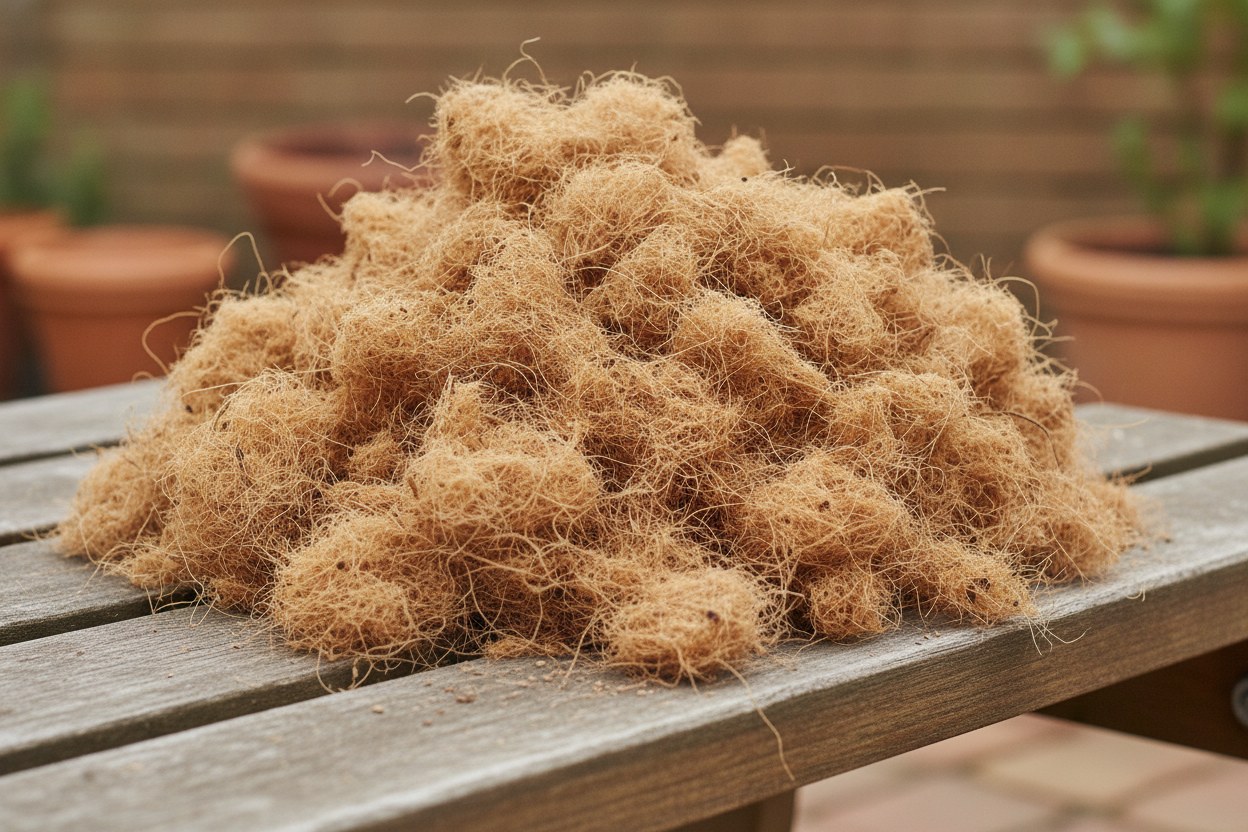
Loose rehydrated coir fibre, light brown and fluffy
Coir — the sponge. Use it sparingly.
Coarse sharp sand of one to three millimetre grains, grey and angular, spread flat
Coarse, sharp, 1–3 mm — never fine builder's sand, which sets like concrete and chokes the roots.

Drainage & pot

The pot decides half the mix

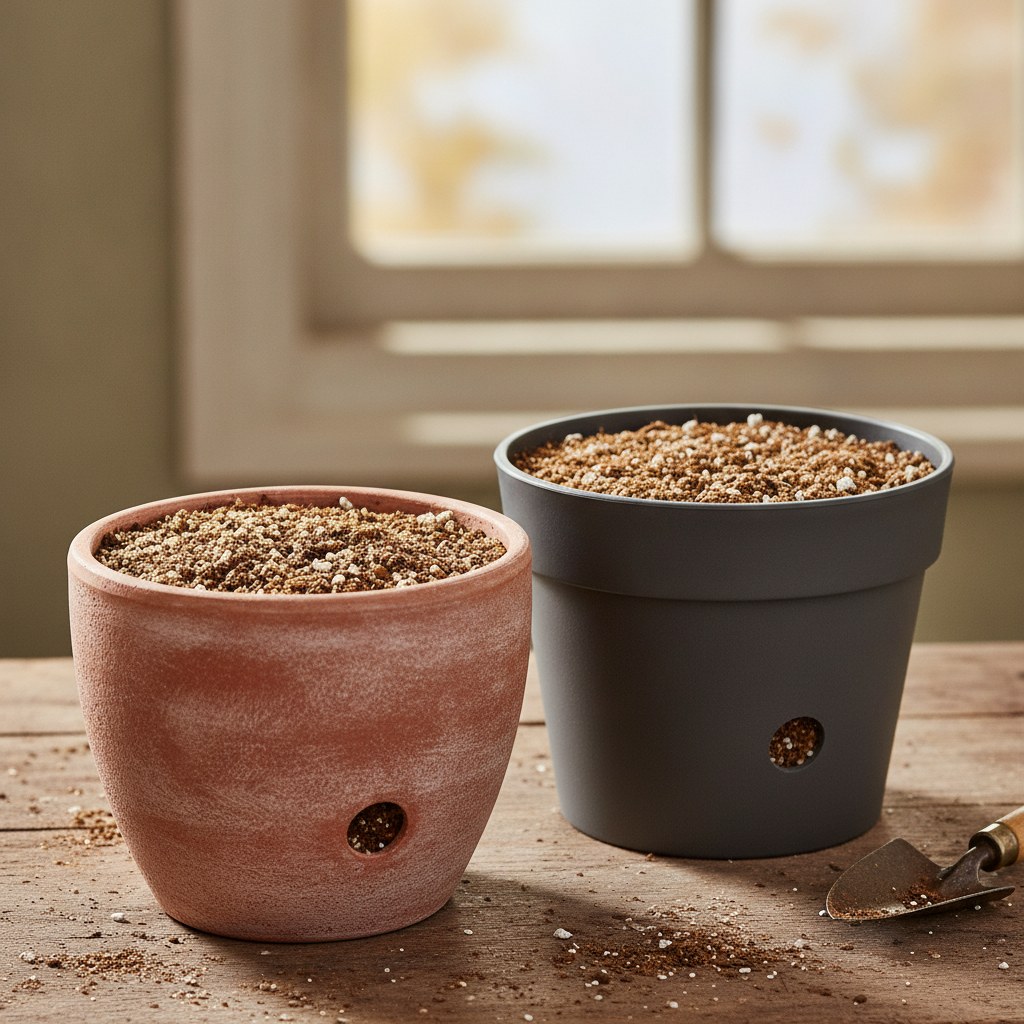
The same mix dries at very different speeds depending on what holds it. A porous terracotta pot wicks water out through its wall; a glazed or plastic pot holds every drop until it evaporates off the top. Grit compensates — but only if the pot has a drainage hole.

Pot A

Terracotta

Breathes through the clay and pulls water out sideways. Forgiving of overwatering, so it carries a little more coir. You will water more often in an Ankara summer.

Pot B

Plastic

Loses water only from the surface. Holds moisture at the core far longer than it looks, so the mix needs more pumice and less coir to stay safe.

Pot C

Glazed / no hole

The slowest to dry and the most dangerous. If it has no drainage hole, treat it as a cover pot only — plant in plastic inside it and lift the inner pot out to water.

Dry-down, measured

Terracotta3–4 d
Plastic6–8 d
Glazed9–12 d

Measured on a 9 cm pot of the reference mix, indoors, 20 °C, moderate light. Your shelf will differ — the ranking will not.

A terracotta pot and a plastic pot side by side, both with visible drainage holes and gritty mix
Same mix, two pots — different watering lives entirely.

The tool

Grit-mix builder

Choose a plant, a pot and a room. The proportions redraw in % and g/L, and the batch figures tell you how many grams of each part to weigh out. Every share has a reason — read the lines under the bar.

Builder · tune to your plant

Pot material
1 L

Result · % and g/L

Four small bowls of substrate — pumice, orchid bark, coir and coarse sand — ready to blend

    Winter dormancy

    A cold dry winter is normal, not death

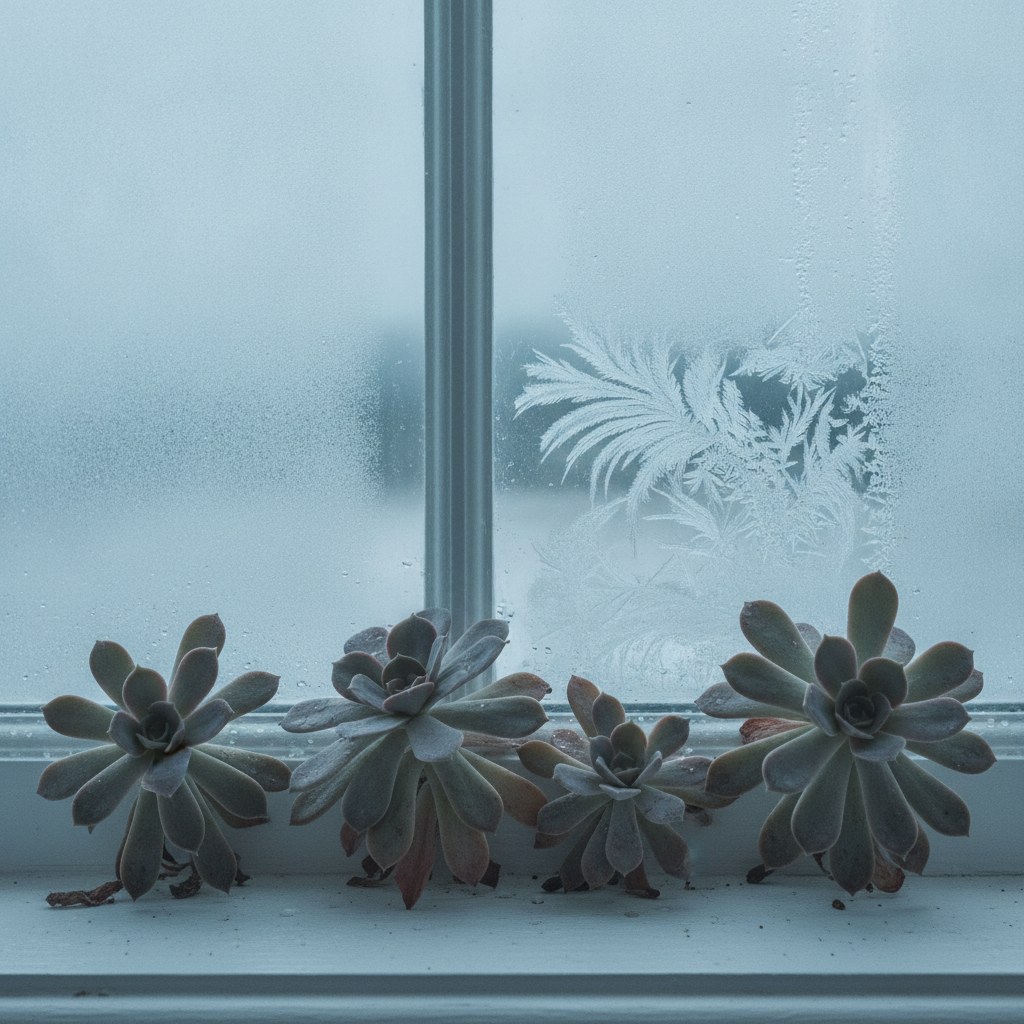
    On the Ankara plateau the growing year is short and the winter is long, cold and dry. Most shelf succulents stop growing from November to February. They shrink, dull and soften a little — and the worst thing you can do is water them to cheer them up.

    Watering calendar · Plate 119-W

    Autumn · Nov

    JanFebMar AprMayJun JulAugSep OctNovDec
    • Active growth — water fully, then let it dry
    • Slowing — water sparingly
    • Winter rest — little or none
    Succulents resting on a cold bright windowsill in winter, leaves slightly shrunken, frost on the glass
    January. Shrunken and dull is resting — not dying.
    What to expect through the year
    PeriodThe plantWaterLight
    Spring (Mar–Apr)Wakes, new growth from the centreResume slowlyHarden to direct sun gradually
    Summer (May–Sep)Full growthSoak when bone dryBright, with afternoon shade in July
    Autumn (Oct)Slows, colours upTaper offAll the light you can give
    Winter (Nov–Feb)Rest: shrinks, dullsLittle or noneCool and bright, 5–12 °C ideal

    Living stones and some mesembs run on the opposite calendar — they rest in high summer. The builder flags this when you pick Lithops.

    Light · the honest part

    Two mistakes grit cannot fix

    Substrate decides whether roots rot. Light decides everything above the soil — and both of light's classic failures are permanent. We would rather say that plainly than sell you a cure.

    An etiolated echeveria: a pale stretched stem with wide gaps between small leaves reaching toward a window

    Fault 01

    Etiolation — the reach for light

    Grown too dark, a succulent stretches: the stem pales and lengthens and the leaves space out as it reaches for a window. A stretched stem never shortens back. You can behead the rosette and re-root the top, but you cannot un-stretch what has grown. The fix is light, not water and not grit.
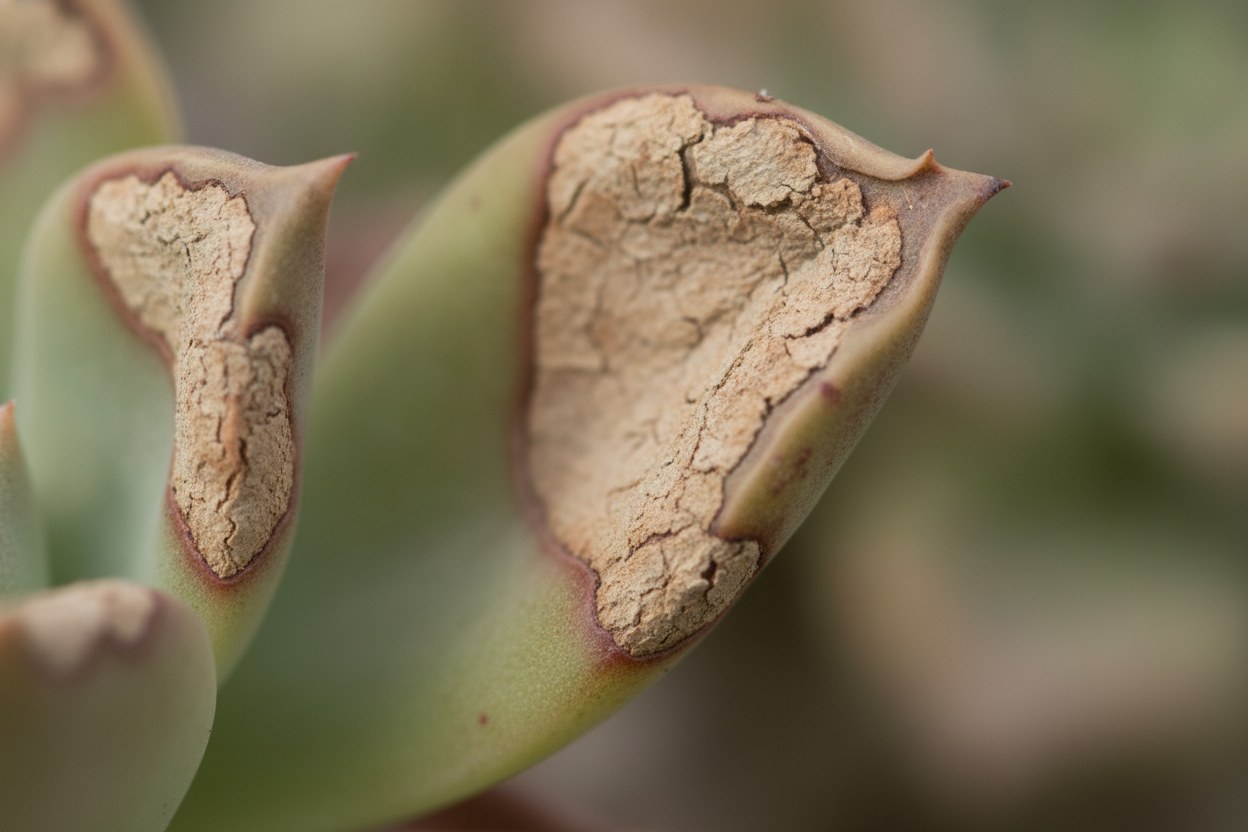
    Sun-scorched succulent leaves with tan and corky burned patches after sudden exposure to strong sun

    Fault 02

    Scorch — too much sun, too fast

    After a dim winter indoors, the first strong spring sun can burn pale tissue in a single afternoon. Scorched patches go tan, then corky, and never heal — they grow out only as the plant replaces the leaf. Harden off over two to three weeks: an hour of morning sun, then a little more each day.

    Root rot — the quiet one

    Rot starts below the line, out of sight, at the base of the stem. The plant goes soft and dull before anything looks wrong on top, and by the time the stem gives way the roots are already gone. There is no treatment once it reaches the crown — only prevention. Grit, a pot that drains, and restraint with the watering can are the whole defence.

    A bright-shelf Echeveria, measured

    LightHigh
    WaterLow
    HumidityLow

    Reader letters

    Written back to us

    We print the letters that teach us something — including the ones that catch us out.

    Reader letter · Oct 2026

    "Swapped my Echeverias into the 45/15/25/15 mix in terracotta after Issue 114. First winter with no mushy casualties. The one snag: your g/L figures assume dry coir, and my brick was still damp, so my first batch came out heavier than the table said."

    Burcu Ş.Keçiören, Ankara · October 2026

    Reader letter · Aug 2026

    "I finally stopped watering my living stones in July after reading the dormancy chart. Two split cleanly in September instead of rotting. I wish you'd mentioned they pull themselves down below the grit line in rest — I thought they were dying and almost dug one up."

    Mert Y.Çankaya, Ankara · August 2026

    Reader letter · Mar 2026

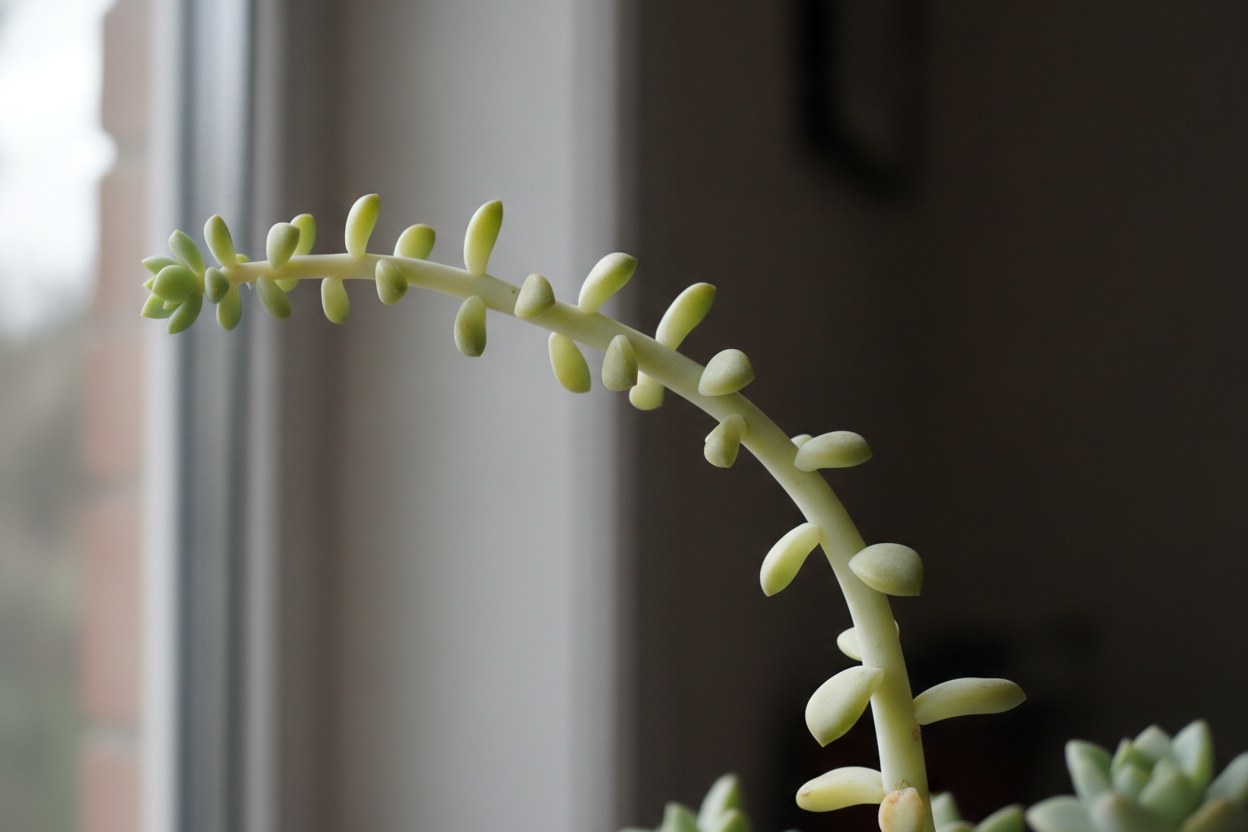
    "The scorch piece saved my string of pearls. Last February I moved it straight to a south window and burned half of it. This year I hardened it off over three weeks — slower, a bit dull at first, but alive and growing."

    Elif D.Yenimahalle, Ankara · March 2026

    From the archive

    Recently on the shelf

    Current issueNo. 119
    Published23 Nov 2026
    CadenceMonthly

    Back issues · recently added

    • 12 Nov 2026Issue No. 119 — the gritty mix, by the numbers
    • 14 Oct 2026Added a g/L column to the substrate spec after a run of reader letters
    • 09 Sep 2026Winter-rest chart redrawn for the Ankara plateau and its cold balconies
    • 02 Aug 2026New macro plates of pumice and coarse sand for the particle-size guide

    Questions

    Asked often

    Reference mix45 / 15 / 25 / 15
    Grit floormin 50%
    Wateronly bone-dry

    Common questions

    Why pumice instead of perlite?

    Both hold air, but perlite is light enough to float to the surface every time you water and crushes to dust within a season. Pumice stays put, keeps its pores, and does not break down. If pumice is hard to find locally, akadama or a baked clay granule is the next best thing — not perlite.

    Is ordinary builder's sand okay?

    No. Fine builder's sand fills the gaps between the grit and sets almost like concrete when it dries, which is the opposite of what you want. Use a coarse, sharp sand of roughly 1–3 mm grains — the kind sold as grit sand or propagating sand.

    Can I use one mix for every succulent?

    Nearly. The reference 45/15/25/15 mix suits most rosette succulents. Shade types like Haworthia take a little more coir; cacti and living stones take a lot less and more grit. The builder shifts the coir share up or down for you rather than changing the whole recipe.

    How often do I water in this mix?

    Only when the pot is bone dry all the way to the bottom, then soak it fully and let it drain. In a terracotta pot in an Ankara summer that might be every four or five days; in plastic in winter it could be once a month or less. Weigh the pot in your hand — a dry pot is noticeably light.

    My plant stretched over winter — can it recover?

    The stretched stem will not shorten; that growth is permanent. What you can do is cut the rosette off with a short neck, let the cut callus for a few days, and re-root it in dry grit. Give it much more light than before, and the new growth will come back tight.

    Do you sell the mix or the plants?

    No. Succulent Shelf is a reading journal, not a shop — we do not sell substrate, plants or anything else. We print the proportions and the reasoning so you can mix your own from parts bought locally. Write to us and we will happily point you toward growers near you.

    Is any of this safe around pets?

    The substrate parts are inert, but keep bagged pumice, coir and sand away from curious animals, and note that some succulents — notably Euphorbia and a few others — are toxic if chewed. If you share your home with a pet, check the species before you put it within reach.

    Write to the shelf

    A plant doing something strange? Tell us.

    We read every letter, and the good ones end up in the journal. Send a photo, your pot, your room and what the plant is doing.

    What to sendplant · pot · room
    Typical replywithin 1 day

    No cures · just measurements